
Edward S. Curtis, the grand inventory
« American photographer (1868-1952), thirty years photographing the Indigenous peoples of North America. »
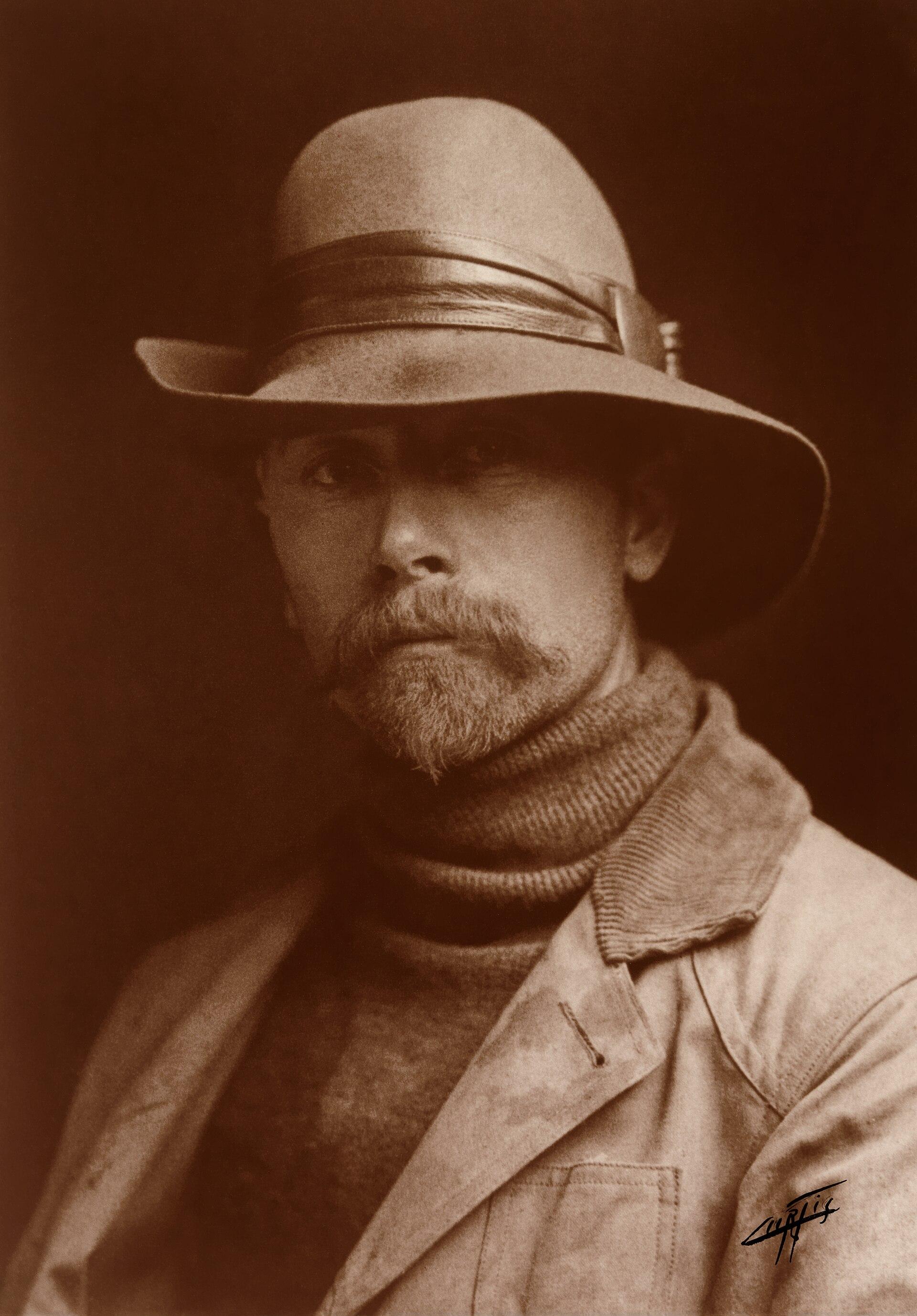
Edward Curtis opened a portrait studio in Seattle in 1891. By the end of the decade he was photographing Indigenous peoples of the Pacific Northwest. The project grew. With financial backing from J.P. Morgan, he devoted thirty years to The North American Indian (1907-1930): 20 volumes, 2,000 photogravure plates.
He documented more than 80 nations, from Alaska to Mexico. The project is ambivalent: he believed he was photographing "vanishing peoples" (the Vanishing Race myth), sometimes removed modern objects from the frame, sometimes brought costumes and props. The communities involved today contest some images and rediscover others.
Curtis died in 1952 in poverty, his work largely forgotten. Rediscovery began in the 1970s. The North American Indian remains, despite its biases, the most extensive visual corpus on the Indigenous peoples of North America before Indigenous photography itself. The debate on what it means today continues.