
Garry Winogrand, the avalanche of images
« American photographer (1928-1984), New York street figure, who left 250,000 undeveloped negatives at his death. »
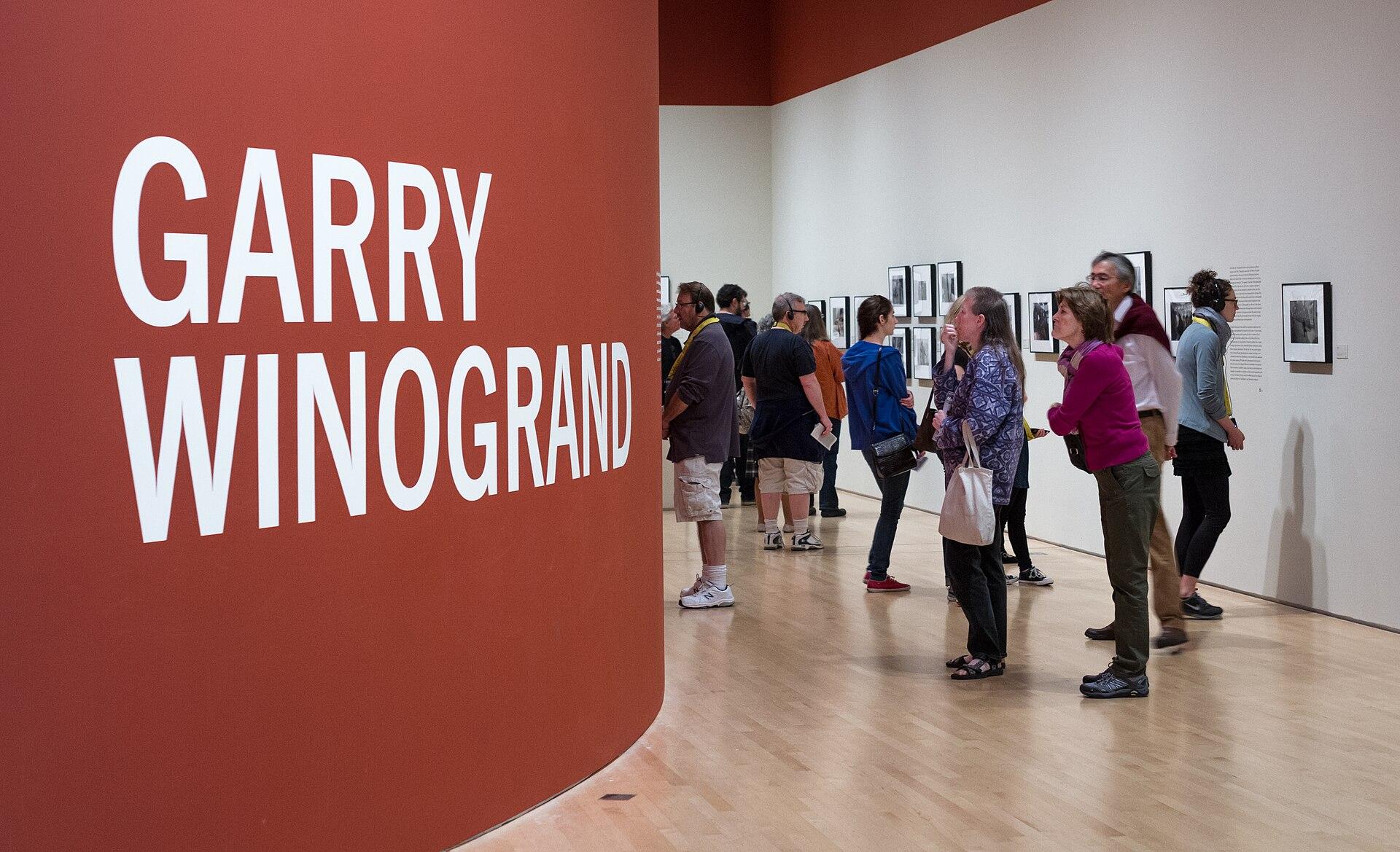
Born in the Bronx, trained as a painter, Winogrand switched to a Leica in the mid-1950s. He moved constantly through Manhattan, openings, games, political happenings. His frame is unstable, sky always present, subjects caught at an angle — he invented a grammar that would school a generation.
Three Guggenheim fellowships. MoMA showed him in New Documents (1967) with Diane Arbus and Lee Friedlander. The Animals (1969) — photographs at the Bronx Zoo, the beasts looking at the humans — became a classic. "I photograph to find out what something will look like photographed," he said.
At his premature death from cancer in 1984, his studio held 2,500 undeveloped rolls of film, plus 6,500 developed but unprinted, plus 3,000 unedited contact sheets. Some 250,000 images he had never himself looked at. MoMA drew a posthumous exhibition from them in 2014.