
Julia Margaret Cameron, portraiture in the wet plate
« British photographer (1815-1879), a pioneer of artistic portraiture in the 19th century, who took up photography at 48. »
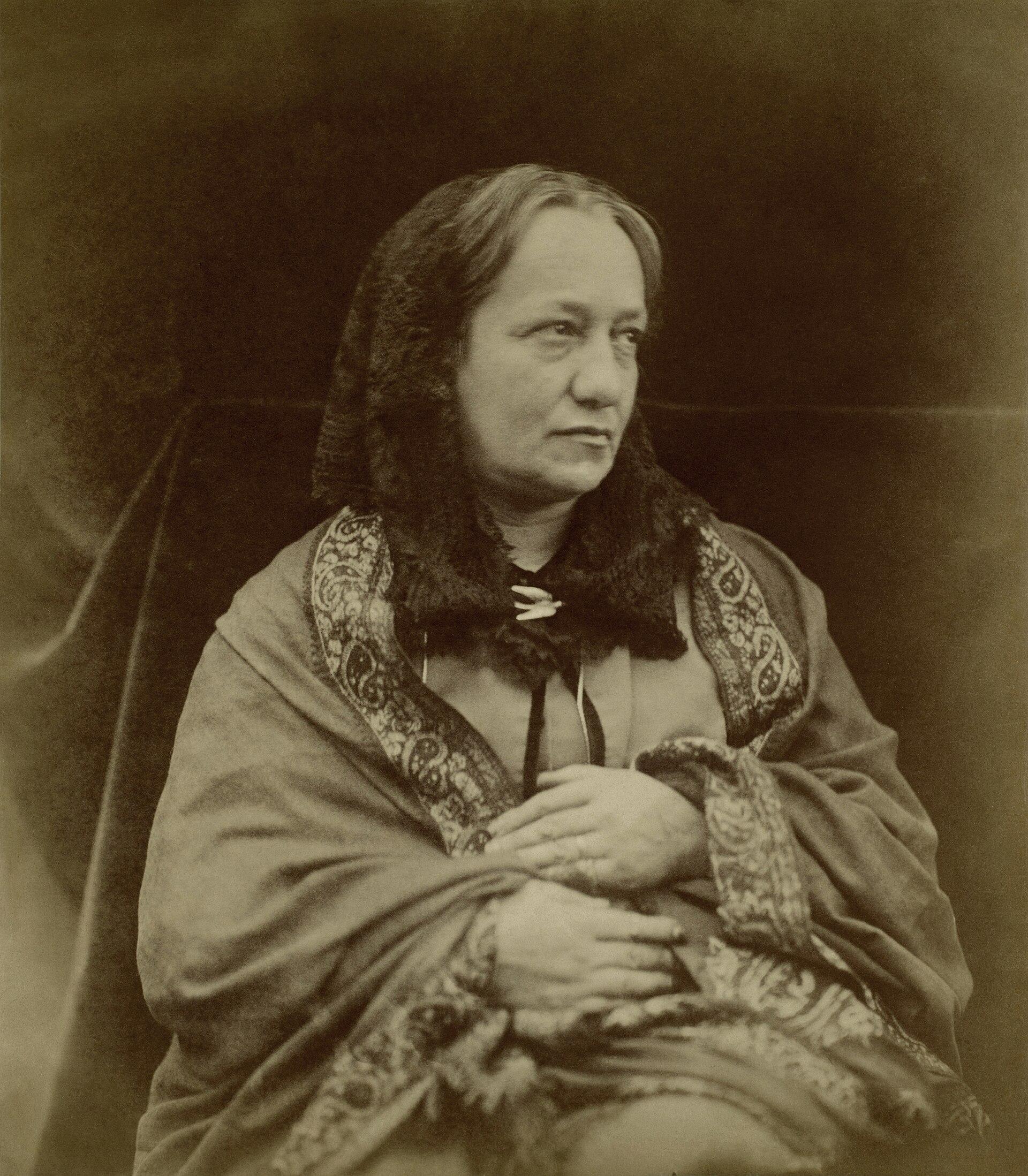
Born Julia Margaret Pattle in Calcutta, married to a senior colonial official, Cameron received her first camera at 48 as a gift from her daughter. Eleven years of intense work followed. On the Isle of Wight, she converted a chicken coop into a studio and a coal house into a darkroom.
Her portraits of Alfred Tennyson, Charles Darwin, Thomas Carlyle — made on wet collodion plates, long exposures, deliberately soft focus — favoured expression over precision. Criticised in their day as "blurred," they in fact invented the modern portrait.
Inspired by the Pre-Raphaelite painters, Cameron staged Shakespearean and biblical allegories with her servants and neighbours. She died in Ceylon in 1879, leaving about 1,200 negatives. Her work is now recognised as a founding point of artistic photography.