
László Moholy-Nagy, the Bauhaus in pictures
« Hungarian artist (1895-1946), Bauhaus teacher and theorist of a radically modern photography. »
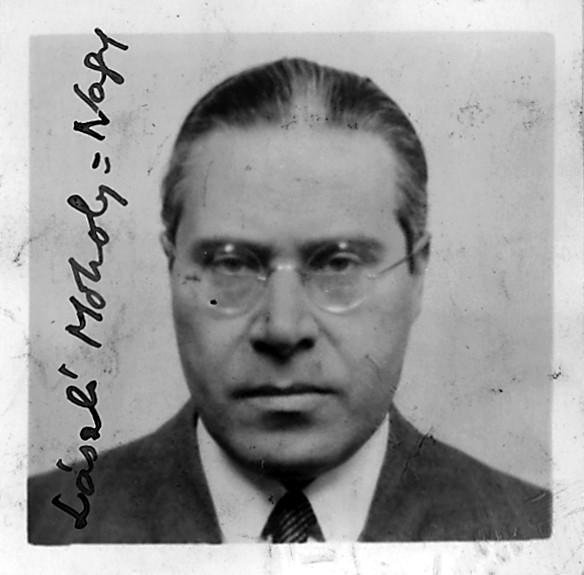
Born in 1895, wounded on the Western Front in WWI, Moholy-Nagy settled in Berlin and joined the Bauhaus in 1923 at Walter Gropius's invitation. There he led the metal workshop and theorised a new visual language: the "New Vision," fit for the modern eye trained by machinery.
His photograms — abstractions made without a camera, by laying objects on sensitised paper — explored light as material. He also worked in extreme high and low angles, photomontage, rayogram, in a spirit of total experiment. Malerei, Fotografie, Film (1925) remains a key book.
Emigrating to the United States in 1937, he founded the New Bauhaus in Chicago, which became the Institute of Design. He died prematurely of leukemia in 1946, but his influence on design, advertising photography and arts education remains considerable, from the 1950s to today.