
Leica M-A: 100% mechanical
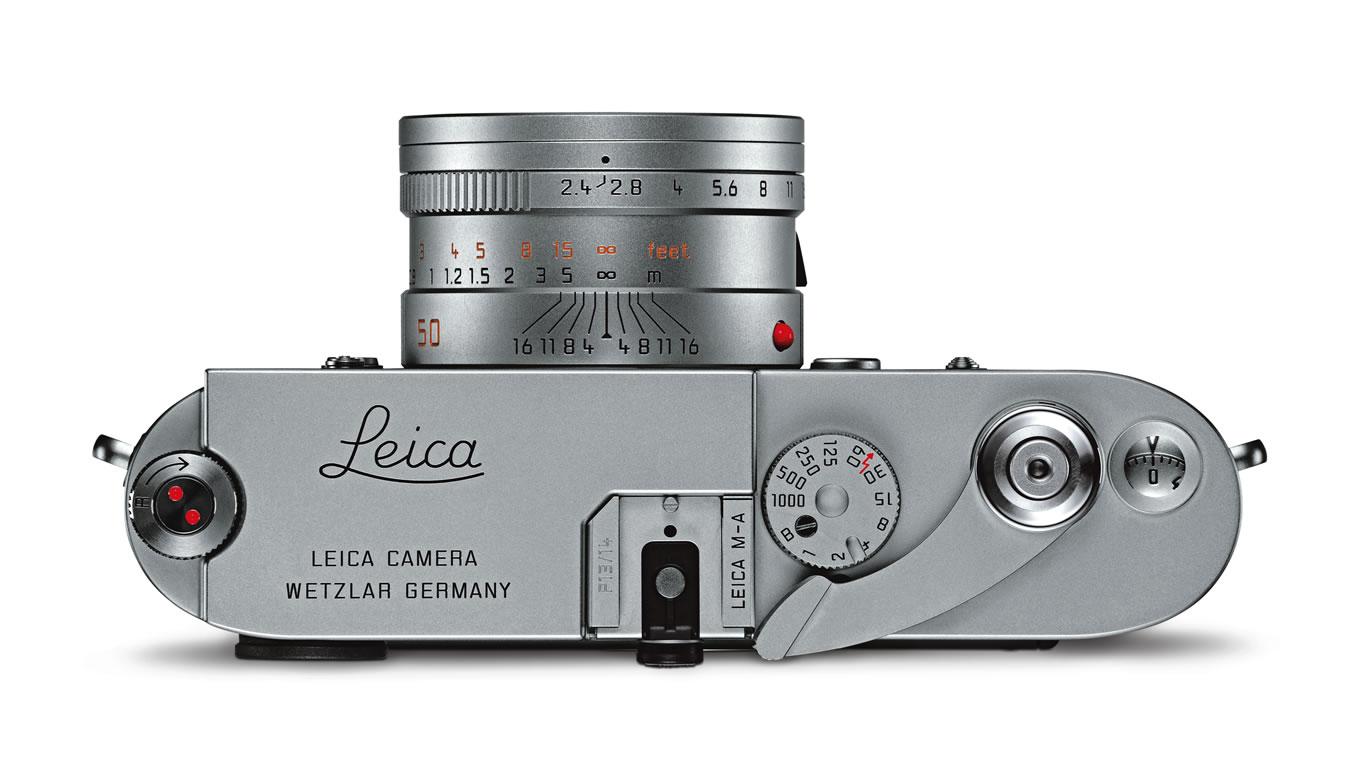
Back to basics? Clever marketing stunt? Leica has unveiled a new "M" body, the M-A. An electricity-free body aimed no doubt at a market of well-off consumers (likely Asian) looking for a form of authenticity. A 100% mechanical body.
Leica M-A: no electricity
The Leica M-A is made up entirely of mechanical parts — no printed circuit, no battery, no light meter, just springs, screws, plates and nuts. The Leica M-A is of course a 24x36 film camera, for which the manufacturer recommends the famous and excellent Kodak Tri-X 400 film. For the rest, not much to say — a mechanism well seasoned, since the first Leica M (the Leica M3) came out in 1954.
Marketing taken to the extreme
I'd never dream of criticising the build quality of Leica bodies or lenses. Pick up a "bad" Leica and you still have in your hands an exceptional camera, for its construction, optical quality and ruggedness. But from a marketing standpoint, we're really on a knife's edge in terms of responding to a customer need.
On Leica's website, one reads:
Purely mechanical, the Leica M-A is a precision instrument so drastically pared down to the essentials that it opens entirely new creative horizons for photographers.
That's for sure! Creativity isn't held back by technology. On the other hand, that some people are untroubled enough by financial matters to drop a small fortune (around €4,100) on a camera that requires buying a handheld light meter to use it — that's for sure!
Still, the Leica M-A is a very beautiful photographic object — a little pricey, no doubt, but a magnificent camera.
It comes in two versions, black and silver, and sells for a little over €4,100.