
What does a fashion show photographer do?
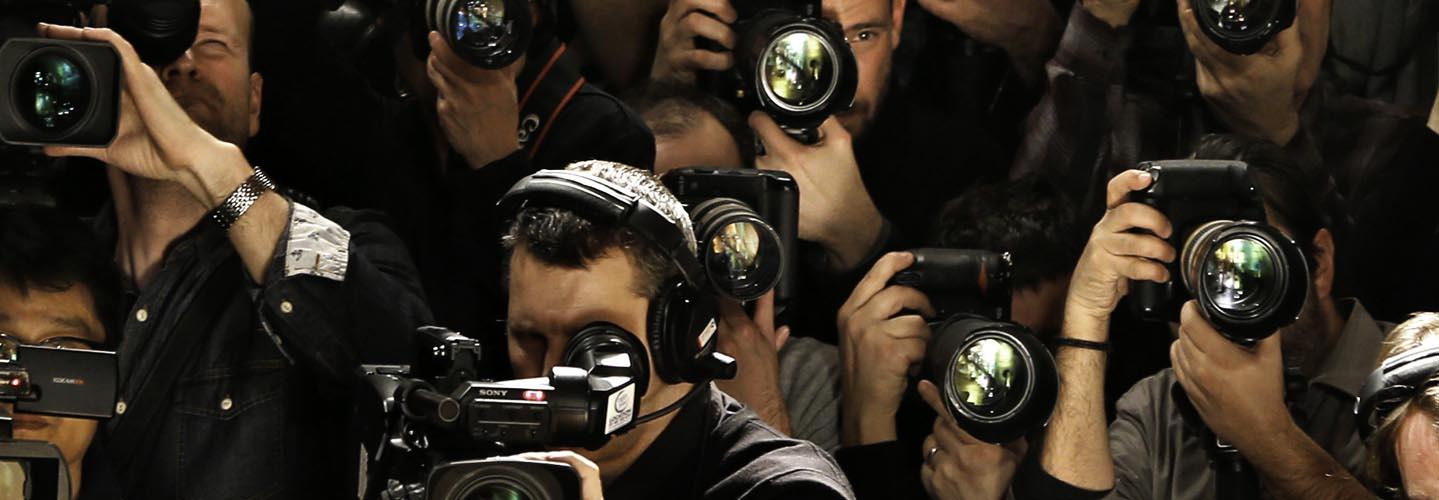
Surreal silhouettes, dramatic make-up, frozen faces and almost-military strides — that's what comes through in fashion show photos… if we set aside the creativity and ingenuity of the designers.
But how are these photos — the ones plastered across every fashion magazine and, today, the many websites devoted to that world — actually made? Producing fashion show photos is, above all, the work of well-equipped, well-organised professionals.
Before the show
The show is scheduled for 4pm in a prestigious Parisian venue: the Grand Palais, an embassy, a luxury hotel, or a historic landmark… Make no mistake — during fashion week, that 4pm means 5pm or, if you're lucky, 4:45pm. No earlier. Yet as a photographer, to settle in you have to arrive a good hour before the show starts. By 3pm, it's good form to be on site if you want a spot. Amid the ballet of stage managers, PR people and technicians, the photographers take over the platform.
An overloaded ocean liner whose decks are crammed with cameramen and photographers — the photo riser is the photographers' zoo. Here, the best spots, at model eye level, are reserved for the brand's own photographers and cameramen. Around them sit the big fashion agencies, often Italian. But you can slip between the monopods to find a good angle. The riser is a Tetris game — you wedge yourself in wherever you can. You grab your "box" (i.e. your case — typically a Pelicase 1510) and slot yourself in. People speak English, French, Italian; they laugh, they grumble, but the vibe is generally pretty cool — unless someone throws their weight around. You can always work things out, but you mustn't push your way in.
Then it's time to prep the gear: a body with a high burst rate and a lens like a 70-200 or a 100-400, a monopod, a box — and you're set.
The box is probably the accessory that can make the difference. In my case, my Pelicase 1510 serves in turn as a transport bag, a stool, or a monopod support. Along with the old reinforced aluminium boxes, it's the most ubiquitous accessory on the risers.
Once the gear is ready, the wait begins. First, the wait for the dress rehearsal — that is, a dry run of the show. The models aren't in costume, but the music, pace, order and especially the lighting match the real show. This lets you set the camera and check angles, possible framings. Every body is set to manual to guarantee uniform exposure across shots and not end up (depending on the clothes) with photos that are too bright or too dark.
The chatter of shutters is intense on the first models and quieter by the end of this dry run. Once the rehearsal is over, you swap memory cards and the bodies are ready again. Shutter speed, white balance, aperture and ISO are locked. The wait can resume.
The show begins
4pm… the room is still empty of guests. A few photographers accredited for the backstage head there to get a few shots. The rest wait. To each their method: phone games, music, or chat about cameras, tripods, designers running late, and the fashion and photo world in general.
By 4:45pm the room is almost full. The photographers are getting impatient. The Italians especially. The lights go down. Silence gives way to music and a first silhouette steps into the light. Immediately, the chatter of shutters begins. Shutters open and close non-stop. Everyone works in burst mode, occasionally checking exposure more for reassurance than to correct it.
The pace at which the models appear leaves no time to change settings anyway. Everyone has their own way of shooting; personally, I scout a point on the runway where I'll take the full-length shot. I shoot for 3 seconds, around 25 frames. Then I take a medium or portrait shot for 2 seconds, and it's time to do the next model's full-length.
Nothing breaks the noise of the cameras for the 12, 13 or 14 minutes the show lasts.
The designer's bow
As soon as the show ends, the riser empties — a mass exodus. Everyone hurriedly packs up their gear and rushes to the next show or back to their office to edit the photos and deliver them to the desk.