
Sony and TSMC, Viltrox in Beijing, Martin Parr in Paris: the week tech caught up with the gaze
« An industrial alliance that may redraw the sensor map, ten lenses unveiled in Beijing by Viltrox, two new bodies from Sony and Canon hitting reviewers' hands, and a classic taking its final bow in Paris — a week in which photography talked tech without forgetting the gaze. »
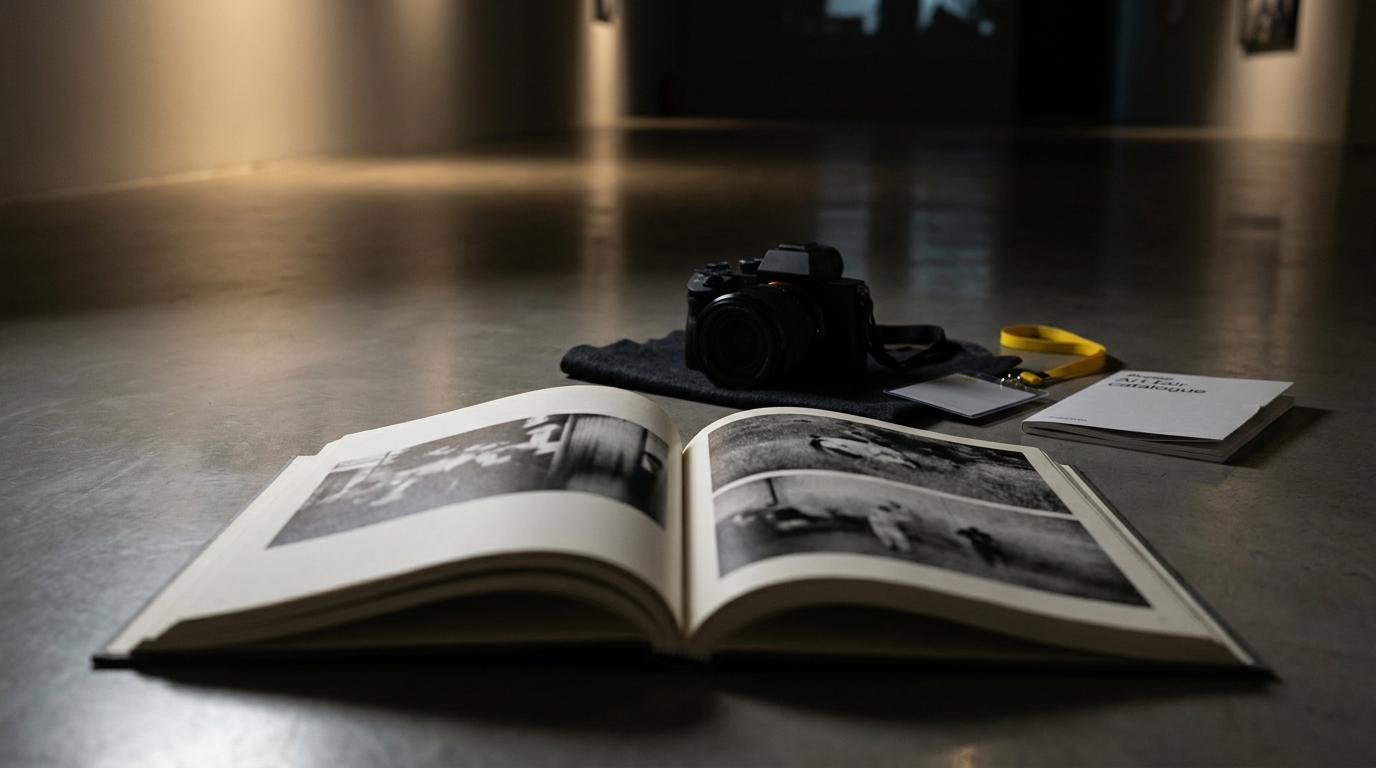
Seven days that mostly talked industry: silicon, glass, and at the far end a retrospective dimming its lights at the Jeu de Paume. A useful week to remember that photography stands on two legs — the tools, and what we do with them.
Sony × TSMC: the alliance that could redraw the sensor map
On 8 May, Sony Semiconductor Solutions and TSMC signed a non-binding memorandum of understanding to launch a joint venture dedicated to image sensors. Sony, as majority shareholder, keeps CMOS architecture and the Koshi plant; TSMC brings what Sony has historically lacked: sub-5 nm fabrication (Phototrend's analysis).
Concretely: faster readout, wider dynamic range, higher sensitivity — and an explicit goal of bringing global shutter to the mainstream. Sony already holds more than 50 % of the mobile sensor market, but had been losing ground to vertically integrated Samsung. By adopting the "fab-lite" model already used for its Bravia TV business, Sony gets cutting-edge fabrication without bearing the astronomical cost of a new fab alone.
For those of us shooting, the calendar is distant — the binding agreement is expected in the coming months, the first chips out of the partnership later still — but the direction is clear: 2027-2028 hybrid sensor generations could reach performance levels reserved today for a handful of exceptional bodies. The pixel race is becoming a process-node race.
Sony A7R VI, Canon EOS R6 V: the megapixel race resumes
Announced on 13 May, Sony's and Canon's new bodies had their first public hands-on coverage this week. The Sony A7R VI pushes to a 67 MP partially stacked sensor — territory until now reserved for medium format — inside a 35 mm body. The Canon EOS R6 V leans into 7K 60p RAW video with a 32.5 MP sensor, paired with the RF 20-50 mm f/4L IS USM PZ, a lens made with lightweight documentary in mind.
Should we chase every turn of the technological wheel? No. But there's a shift in this generation worth attention: high resolution stops being a studio argument and becomes usable on assignment. For those who crop, reframe, and rework in post, that's room to manoeuvre — not a gadget.
Viltrox at China P&E 2026: ten lenses in one go
At the China P&E Imaging Show in Beijing, Viltrox laid out a roadmap of ten lenses. Leading the line-up, an AF 35 mm f/1.4 Pro for Sony E and Nikon Z, which completes the Pro trilogy alongside the existing 50 mm and 85 mm. On APS-C, two f/1.2 lenses — an 18 mm (27 mm equiv.) and a 40 mm (60 mm equiv.) — ending the historic brands' monopoly on bright apertures in this segment.
The rest of the catalogue shows the breadth: a 75 mm f/1.8 and a 90 mm f/2.2 in the EVO line, a pancake push (26 mm f/2.8 in Sony E, the 28 mm f/4.5 arriving in L-mount, a new 28 mm f/2.8), the brand's first autofocus Micro Four Thirds lens (AF 25 mm f/1.7), and — most strikingly — a T/S 35 mm f/2.8, Viltrox's first tilt-shift, a signal sent to architecture shooters.
Few firm dates, fewer prices, but the intent is clear: Chinese optics are no longer content to cover the entry level. For a working photographer, that's good news — more choice, different ways to allocate a budget, and pressure on the old margins of the established makers.
Martin Parr closes at the Jeu de Paume — last day, 24 May
At the Jeu de Paume, the "Global Warning" retrospective devoted to Martin Parr took its bow yesterday, Sunday 24 May. Four months to re-read thirty years of a photographer who, better than most, documented consumerism, mass tourism and globalisation without ever sliding into cynicism. The yellow chain of seaside resorts, the fork in the too-colourful plate, the sunscreen on red skin: detail, always, that makes meaning.
Parr reminded us of something easy to forget: documentation can be funny without being light. And that irony, when it's well-tuned, is a rigorous form of tenderness.
What I take away from the week
A silicon alliance that promises medium format inside our 35 mm bodies, ten lenses from Shenzhen reshuffling the deck, two new generations at Sony and Canon, and a major witness packing up his prints. The technology moves fast, but it only moves to serve a gaze. The tools change; the question doesn't: what did we see, and what do we do with it?