
Weegee, the scanner of the New York night
« Ukrainian-born American photographer (1899-1968), tabloid pioneer with a police-radio scanner in his car. »
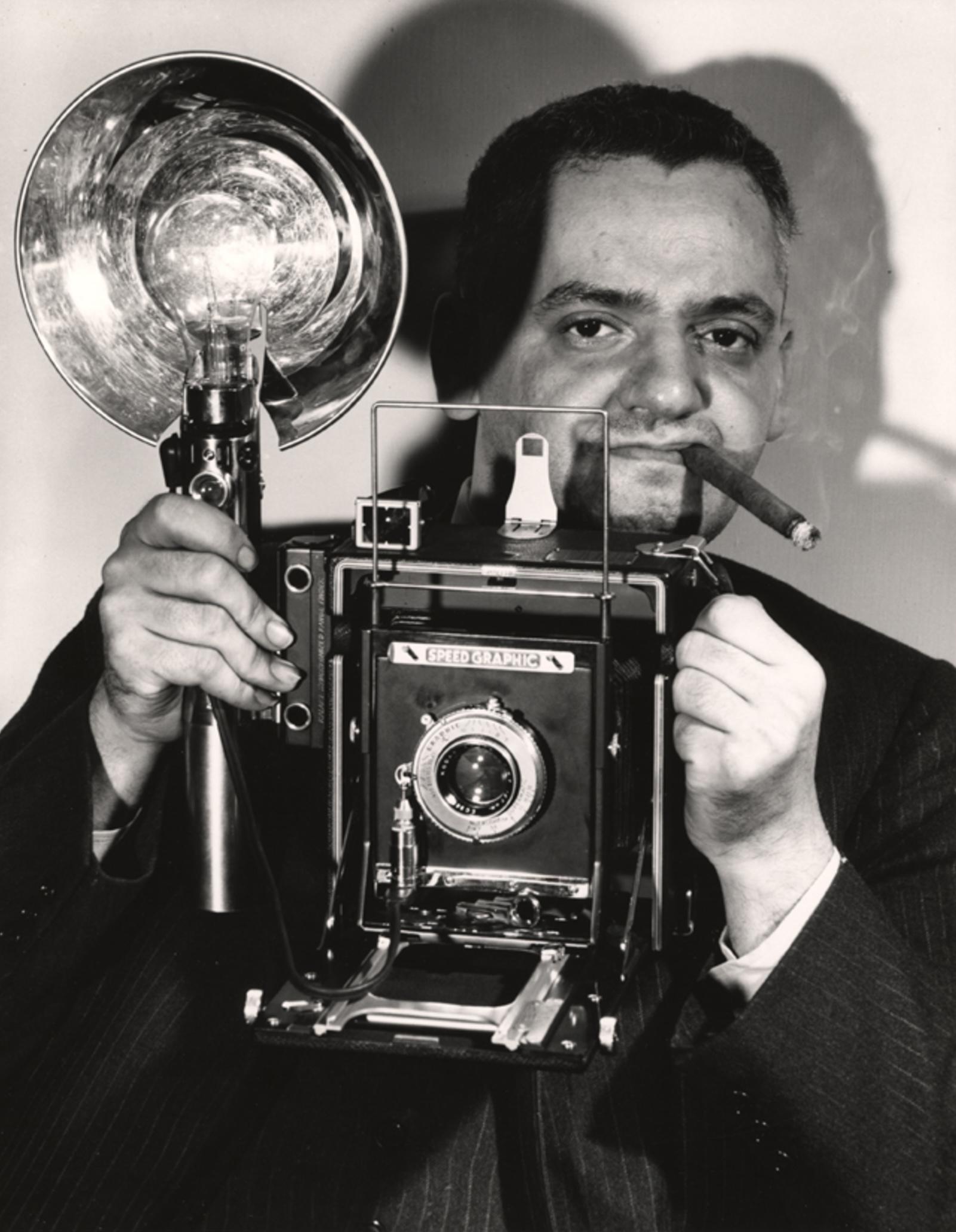
Born Usher Fellig in Galicia, Weegee arrived in New York at 10 with his Jewish parents. He became a freelance photographer at 35 after years of selling press pictures. His trick: a radio scanner in the trunk of his car, tuned to police frequencies. He reached crime scenes ahead of the press.
He signed Weegee, a distortion of "Ouija," a nod to his gift for sensing trouble. Naked City (1945) compiled his black-and-white flash photos: murders, fires, gangster perp walks, onlookers. The tabloid found its voice. Stanley Kubrick, who had photographed for Look at 17, was fascinated.
A technical adviser on Dr. Strangelove (Kubrick, 1964), Weegee spent his last years in Hollywood, fish-eye distortions, experiments. He died in 1968. His aggressive flash and shameless rapport with victims founded the modern tabloid aesthetic — for better and for worse.